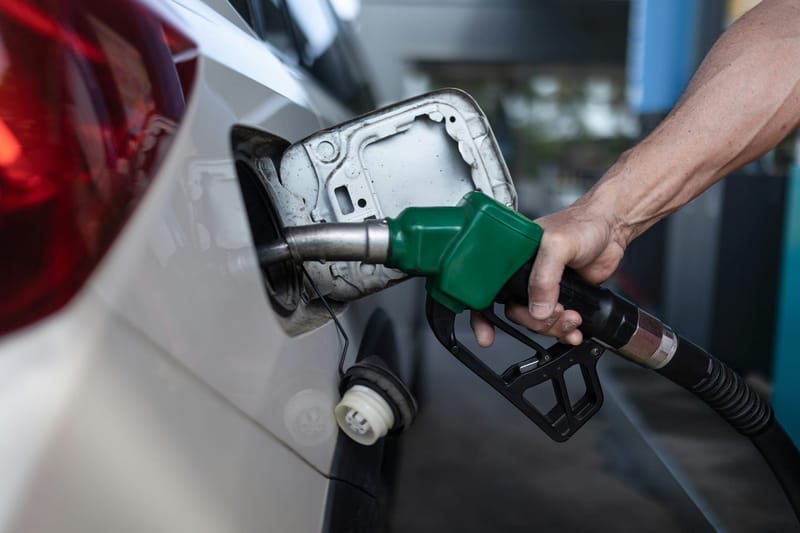
Ohio motorists just endured the state’s most expensive August at the gas pump on record.
The statewide average price for regular gasoline was $3.988 per gallon in August, according to newly released data from the U.S. Energy Information Administration. That was the highest August average in the EIA’s Ohio gasoline price series, which dates to 2003.
The previous record was set in August 2012, when regular gasoline averaged $3.776 per gallon statewide. This year’s average topped that mark by more than 21 cents per gallon.
The year-over-year increase was far larger. Regular gasoline averaged $3.147 per gallon in Ohio in August 2025, according to the same federal price data. That means the August 2026 average was about 84 cents per gallon higher than one year earlier, an increase of nearly 27%.
The record comes less than two years after President Donald Trump repeatedly made dramatically cheaper energy a centerpiece of his campaign to return to the White House.
At an October 2024 campaign rally in Atlanta, Trump promised: “I will cut your energy prices in half within 12 months.” He made the same 50% pledge repeatedly at campaign stops around the country.
Trump continued predicting sharply cheaper gasoline after taking office. During an Aug. 6, 2025 White House appearance, Trump said gasoline would “soon” be “less than $2 a gallon.”
Instead, one year later, Ohio drivers spent August paying nearly twice that amount on average.
Prices climbed above $4 per gallon during portions of the month. The EIA’s weekly Ohio data show regular gasoline averaging $4.085 per gallon on Aug. 3 before falling to $3.899 on Aug. 10. One week later, the statewide average surged to $4.180 per gallon on Aug. 17, an increase of more than 28 cents in seven days.
The average fell to $3.981 on Aug. 24 and $3.797 on Aug. 31, but the month’s overall average still established a new August record.
The surge has unfolded during the prolonged U.S.-Israeli war with Iran, which began Feb. 28 and has repeatedly disrupted one of the world’s most important energy corridors.
The Strait of Hormuz carried roughly one-fifth of the world’s oil before the conflict. Reuters reported in late August that disruptions to energy supplies through the strait had helped push U.S. gasoline prices above $4 per gallon, roughly $1 higher nationally than a year earlier.
Ohio’s monthly numbers show how sharply the conflict coincided with higher prices at the pump. Regular gasoline averaged $2.758 per gallon in February, when the war began at the end of the month. The statewide monthly average climbed to $3.439 in March, $3.778 in April and an extraordinary $4.627 per gallon in May, according to EIA data.
Trump has acknowledged that the conflict is costing Americans at the pump. In May, while discussing gasoline prices and his decision to attack Iran, Trump said Americans would have to put up with higher prices “for a little while” and dismissed the additional cost as “peanuts.”
By August, the president was again defending higher fuel prices as a tradeoff for continuing the conflict. Reuters reported that Trump argued Americans should accept paying more for gasoline because he believed military action was necessary to prevent Iran from obtaining a nuclear weapon.
Husted voted against 13 efforts to withdraw U.S. forces
Ohio’s U.S. Senate race has put the economic consequences of the Iran war directly on the November ballot.
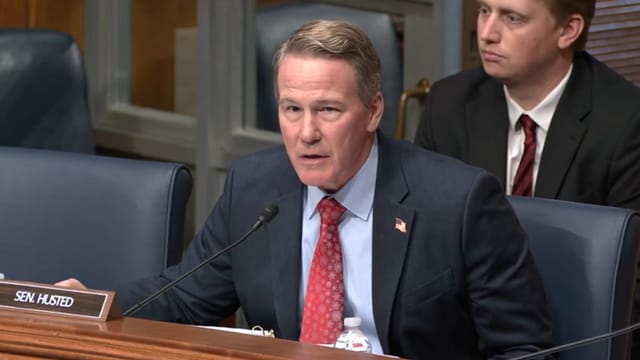
Republican U.S. Sen. Jon Husted has voted 13 times against Senate efforts to withdraw U.S. forces from hostilities with Iran or advance measures requiring their withdrawal, according to a TiffinOhio.net review of federal roll-call records. Husted opposed every such Senate roll-call effort through July 30.
The votes included measures explicitly directing the removal of U.S. Armed Forces from hostilities “within or against the Islamic Republic of Iran that have not been authorized by Congress.” Husted’s own Senate voting record documents his opposition to the withdrawal measures.
Husted has defended his position by arguing that abandoning the military campaign could allow Iran to resume efforts to develop a nuclear weapon. But his response to Ohioans worried about the cost of gasoline drew attention earlier this year.
During a May appearance on Northeast Ohio’s “Strictly Speaking Unfiltered,” Husted discussed conversations with constituents concerned about gas prices and asked rhetorically: “What do you want me to do?”
As TiffinOhio.net reported at the time, Husted followed the question by arguing that the alternative would be walking away from Iran and allowing what he called the world’s leading sponsor of state terrorism to return to developing a nuclear weapon.
Husted faces former Democratic U.S. Sen. Sherrod Brown in November’s special Senate election. Libertarian William Redpath is also on the ballot.
Brown has made the cost of the Iran conflict a major line of attack against Husted, repeatedly pointing to Husted’s votes and the higher prices Ohioans have faced for gasoline, diesel and other goods affected by energy and transportation costs.
The political pressure comes as fuel prices remain elevated heading into the fall. AAA reported an Ohio average of $3.9003 per gallon for regular gasoline on Sept. 3, up from $3.1313 one year earlier.
Diesel has risen even more dramatically. AAA put Ohio’s Sept. 3 diesel average at $5.7895 per gallon, compared with $3.6388 one year earlier. Reuters reported Thursday that U.S. diesel prices had reached a record high amid renewed fighting with Iran, disruptions to global fuel supplies and historically low inventories.
Oil markets also remain exposed to further escalation. Reuters reported this week that renewed U.S.-Iran fighting sent crude oil prices sharply higher again as traders reacted to the threat of additional disruptions around the Strait of Hormuz.
Trump and his administration have sought to push prices back down by pressing refiners to increase output, pursuing additional sources of crude oil and accusing some oil companies of profiting excessively from the crisis. But the conflict that began in February has continued into its seventh month, and Vice President JD Vance said Thursday that the administration could not provide a timeline for when hostilities would end.
The August record reflects nominal pump prices and is not adjusted for inflation. But measured by the prices motorists actually saw at the pump, the EIA data show that no August since the agency began tracking Ohio gasoline prices in 2003 was more expensive than August 2026.