
This story was originally published by Canary Media.
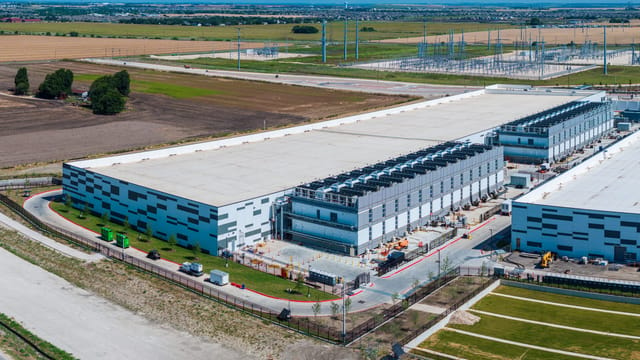
Ohio has emerged as one of the top states for data center developers, with roughly 100 of the facilities already up and running and nearly 150 more on the way.
Many of those planned facilities may never get built, but their projected electricity needs will drive up energy bills for Ohioans anyway.
Utilities base their grid investments on demand projections. In Ohio, those forecasts are now through the roof. The state’s largest regulated electric utility is American Electric Power’s Ohio Power Co., which anticipates demand will nearly triple over the next decade, largely due to expected data center projects.
Critics question the validity of these forecasts — and the wisdom of using them to justify costly investments that utility customers will end up on the hook for if the numbers don’t pan out.
Forecasts from utilities in Ohio and elsewhere generally presume trends will continue along the same paths as in recent years, said Jonathan Koomey, a researcher who runs the firm Koomey Analytics and focuses on issues related to data centers, computing, and climate solutions.
But in fact “there is deep uncertainty,” Koomey said. Computing generally has gotten more efficient over time, and so future data centers might be less energy-intensive. There’s also the question of whether demand for AI services will be able to support the ambitious plans developers are pursuing today. Plus, developers often shop projects in multiple locations to look for the best deal.
Ohioans are already facing rising power bills — and more increases are now likely based on sky-high demand forecasts.
“We have watched projected demand become the justification for enormous spending, record capacity costs, and increasingly urgent claims about grid reliability,” Brad Belden, board chair of the Ohio Manufacturers’ Association Energy Group, said at its annual energy conference on Aug. 27. “‘Reliability’ cannot become the magic word that ends every conversation about cost.”
So far, regional grid operator PJM Interconnection hasn’t been persuaded by those challenging the extent to which energy needs will actually grow. PJM serves Ohio and all or parts of a dozen other states, overseeing the procurement of generation and transmission.
“The Ohio Manufacturers’ Association has been saying that, effectively, load growth is not real. I think that is both naive and irresponsible,” said Asim Haque, PJM’s executive vice president for government and member services.
Mounting costs
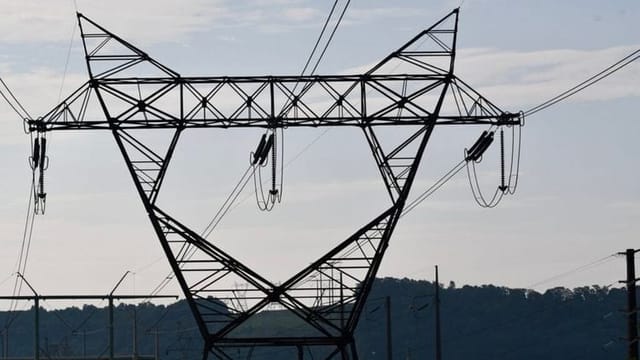
Data center forecasts can drive up electricity costs in two key ways: by increasing capacity prices and by prompting utilities to build new power lines in anticipation of future demand.
Capacity prices pay for power plant operators to be available to meet spikes in demand. In PJM territory, those charges have surged more than tenfold since May 2025. That’s because PJM lacks the total generation necessary to meet the deluge of demand it expects from data centers.
Meeting that need, which analysts like Koomey say may be inflated, will likely lead to a jump in fossil-fueled electricity. Between 2025 and 2027, added generation from fossil-fueled plants in the region will be 2.5 times the extra electricity supplied by solar and wind, reported Dennis Wamsted, an energy analyst for the Institute for Energy Economics and Financial Analysis.
Analysts have criticized PJM in general and Ohio in particular for making it difficult to build inexpensive solar, wind, and battery projects in recent years — all of which could have helped cushion rising costs now and alleviate projected capacity problems in the future.
Projections by utilities and the grid operator also drive plans for expanded infrastructure, because utilities map out those investments today on the basis of what they expect customers will need in the future.
“If these data centers don’t show up …, you’re going to pay the costs,” said John Seryak, CEO and founder of the energy consulting firm RunnerStone.
In Ohio, both manufacturing and consumer advocates worry that plans to build transmission and other infrastructure are not being met with enough scrutiny.
Although large-scale projects are overseen by the Federal Energy Regulatory Commission, lower-level “supplemental” transmission is up to the states, PJM’s Haque said. Those projects are necessary to meet growing demand, including that from data centers, especially where developers won’t bring their own power or nonetheless want to tie into the grid for backup.
Supplemental transmission projects can add up to billions of dollars, though. And in Ohio, no one is independently examining their prudence or cost-effectiveness, Maureen Willis, agency director for the Office of the Ohio Consumers’ Counsel, said at the OMA conference.
A 2025 Ohio law calls for utilities and state regulators to consider grid-enhancing technologies as a more cost-effective alternative to building traditional transmission projects. But it’s unclear how that provision and cost recovery will work together. A new rule limiting the time to question company witnesses about customer charges will make it even harder to challenge costs.
The Ohio Consumers’ Counsel filed a complaint with FERC in 2023, asking it to require scrutiny of the costs for supplemental transmission, but the agency has not yet acted. Last month the agency asked the commission to speed up its review.
“OCC’s consumer-protection complaint has been collecting dust at FERC for nearly three years while billions more in transmission projects continue to be added,” Willis said. “Consumers deserve answers, accountability, and protection from unjustified costs.”
In Ohio, the largest projected overall growth in demand is the tripling expected by AEP Ohio, Koomey said at the OMA event.
As of February, that AEP Ohio load forecast reflected signed contracts for 17.8 gigawatts of data-center demand planned to come online at various points through 2035, down from its earlier estimate in 2025.
Still, even at the lower level, critics question the figure. A March 2026 regulatory staff filing at the Public Utilities Commission of Ohio noted some double-counting for AEP Ohio’s expected data center growth.
At the PJM level, the grid operator released new guidance in January that alters its process for load forecasting and adds steps for states to review adjustments for large loads. Critics say that’s not enough.
“Show us the demand. Show us what is being built. Show us who is paying for it. And show us what happens if the forecast is wrong,” said Belden of the Ohio Manufacturers’ Association Energy Group. “Those are the questions any responsible business would ask before making a major investment. We should expect the same discipline when billions of dollars in grid investment are on the table.”
“New investment should strengthen Ohio’s economy, not turn existing customers into an insurance policy for projects that may never materialize,” he said.
This story is republished from the Ohio Capital Journal under a Creative Commons license. View the original article.