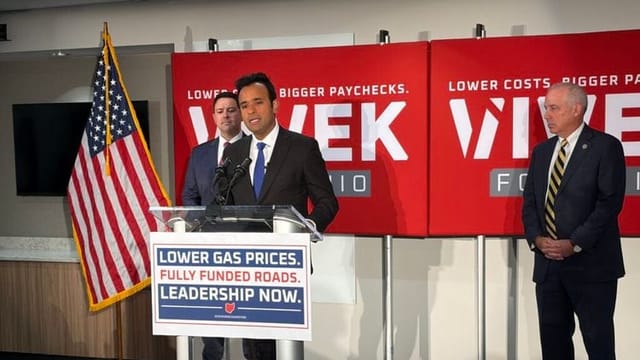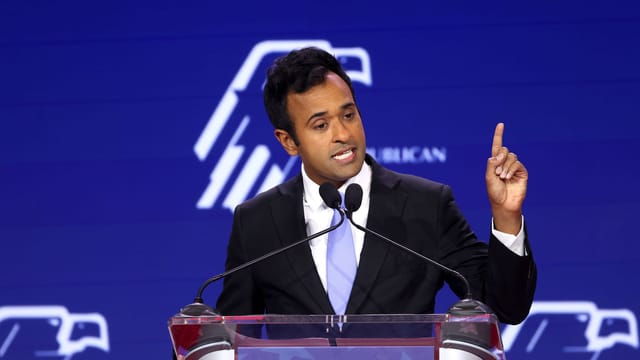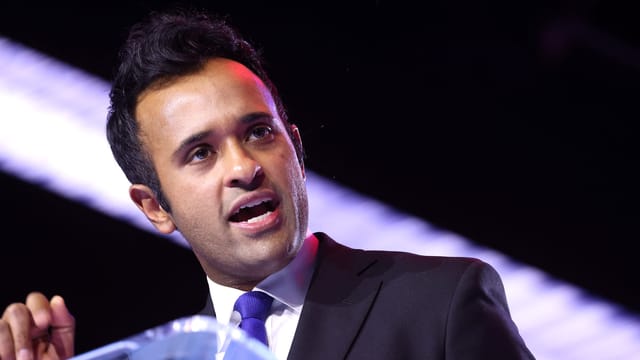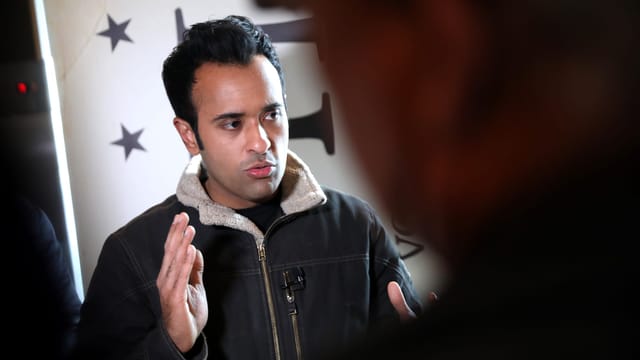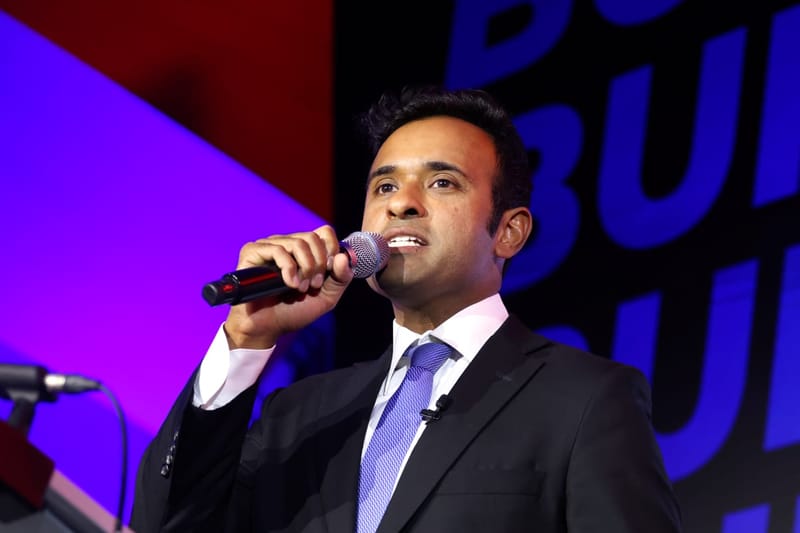
Vivek Ramaswamy launched his campaign for Ohio governor with a promise that was easy to understand: property taxes should eventually disappear.
“We need to bring down property taxes in this state immediately — eventually down to zero,” Ramaswamy told supporters at his February 2025 campaign launch. “If you own land, it should not feel like it’s a lease from the government.”
Ohio’s own budget officials have now put a price on that promise.
A February memo prepared for Republican Gov. Mike DeWine by the Ohio Office of Budget and Management found that abolishing local property taxes would wipe out more than $20 billion in annual revenue that pays for schools, police, fire departments, emergency services and other local government operations.
Replacing that money through Ohio’s sales tax could require a statewide rate approaching 15% to 18%, according to the OBM memo. To keep the rate from climbing that high, the office said lawmakers could expand the sales-tax base to food, health care and other goods and services that are currently exempt.
Without replacement revenue, OBM warned that police, fire and EMS agencies would face station closures, dramatically reduced staffing and slower emergency response times. Schools would face layoffs, larger class sizes, closures and program cuts. The memo concluded that abolishing property taxes without replacing the money would “quite literally ‘defund’ the police.”
The OBM memo analyzed a citizen-led constitutional amendment to abolish property taxes statewide. Ramaswamy’s campaign proposal was separate, but he repeatedly promised voters the same result: property taxes at zero.
Ramaswamy promised zero. Ohio found a $20 billion-plus hole.
Property taxes generate about $24 billion a year for Ohio local governments, including revenue from real property and public-utility personal property, according to OBM. The memo said that total is roughly equal to all revenue Ohio collects from its state income and sales taxes combined.
That money is not sitting unused in Columbus. Ohio does not collect a statewide property tax. The revenue is collected locally and supports school districts, counties, cities, townships and other local entities.
OBM said the state already spends more than $2 billion a year reimbursing local governments and schools for existing property-tax relief programs. Replacing another $20 billion or more after abolishing local property taxes would be “fiscally impractical and economically harmful,” the agency concluded.
Ramaswamy’s zero-tax promise never accounted for where that money would come from.
Eliminating the property tax does not eliminate the cost of teachers, sheriff’s deputies, firefighters, ambulances, libraries or local government. If those services remain, the bill has to be paid another way.
A 15% to 18% state sales tax
Ohio’s state sales-tax rate is 5.75%. After consulting with the Ohio Department of Taxation, OBM estimated that replacing local property-tax revenue through the sales tax could require a statewide rate approaching 15% to 18%.
The agency warned that rates that high would encourage tax avoidance, push consumer spending across state lines and hurt Ohio businesses, especially in border counties.
DeWine called the potential result “absolutely devastating,” according to the Statehouse News Bureau.
For Ohio families, the shift would be immediate. A homeowner could lose a property-tax bill and then pay a much higher tax every time the family buys taxable goods. Renters would pay the higher sales tax too, even though they do not receive a property-tax bill directly.
Ramaswamy has also pledged to make Ohio a zero-income-tax state, cutting off another potential replacement source. OBM estimated that replacing property-tax revenue through the income tax could require statewide rates of roughly 11% to 15%.
Ramaswamy’s original tax agenda therefore promised to eliminate both property taxes and the state income tax while leaving unanswered how Ohio would fund the services those taxes support.
Groceries and health care could be next
OBM identified another way to keep the sales-tax rate from climbing toward 15% to 18%: start taxing purchases Ohio currently leaves untaxed.
“To moderate the potential rate increase, the sales tax base could be broadened to tax food, healthcare, or other goods or services that are currently exempt,” the state analysis says.
Under Ohio law, most groceries purchased for consumption away from the store are exempt from the state sales tax. Prescription drugs, insulin and a range of prescribed medical equipment and supplies are also exempt.
To keep the sales-tax rate from reaching the high teens, OBM identified food and health care as additional sources of revenue Ohio could tax.
That turns Ramaswamy’s promise on its head. He told Ohioans eliminating property taxes would let them keep more of their own money. DeWine’s budget office found that the cost could instead be shifted onto what those same Ohioans buy, including basic necessities.
The property-tax bill disappears from the mailbox. The tax bill shows up somewhere else.
The alternative: police, fire and school cuts
If Ohio abolished property taxes without replacing the revenue, OBM said local services would take the hit.
Property taxes account for approximately 65% of local tax revenue in Ohio, according to the memo. About three-fifths of property-tax revenue supports local school districts.
OBM warned that schools would face layoffs, larger class sizes, school closures and program cuts.
Police, fire and EMS agencies would face station closures, especially in smaller communities and townships, along with “dramatically reduced staffing” and slower emergency response times.
The DeWine administration summarized the result in unusually stark terms:
“As this analysis demonstrates, a constitutional amendment to abolish local property taxes, with no plan to replace the lost revenues, would quite literally ‘defund’ the police — and fire departments, schools, libraries, senior centers, and other local government services — in our communities statewide.”
That finding collides directly with Ramaswamy’s law-and-order campaign message. His campaign platform promises to “crush crime,” support law enforcement and slash taxes at the same time.
Police departments cannot operate without revenue. Fire departments cannot staff stations without revenue. School districts cannot pay teachers without revenue. Abolishing the tax that supplies a large share of that money means replacing it or cutting what it funds.
Ramaswamy walked away from zero
Ramaswamy no longer campaigns on eliminating property taxes.
By February 2026, he was promising what he called “the biggest property tax rollback in the history of our state” instead of abolition, according to the Statehouse News Bureau.
By July, the reversal was explicit.
Asked how local services would be funded under his tax plan, Ramaswamy said he wanted to roll property taxes back to pre-pandemic levels — “not eliminate them, OK?” — according to the Ohio Capital Journal.
His campaign now proposes rolling property taxes back to levels before the end of the COVID-19 pandemic and limiting their future growth. Ramaswamy argues that economic and population growth would generate additional revenue to help cover local needs.
The published plan does not provide a statewide figure for how much local revenue the rollback would remove or a dollar-for-dollar formula showing how affected school districts, police departments, fire departments and other local governments would be made whole.
Ramaswamy has abandoned the zero-property-tax promise, but the same arithmetic follows his current plan: every dollar cut from local property-tax collections must be replaced, removed from a public service or shifted to another taxpayer.
The tax bill moves. It does not vanish.
Ramaswamy launched his campaign promising to take property taxes “eventually down to zero” while also calling for the elimination of Ohio’s state income tax.
DeWine’s budget office has now shown the price of the first promise.
Replacing property-tax revenue through the sales tax could push Ohio’s statewide rate toward 15% to 18%. Keeping the rate lower could mean extending the sales tax to food, health care and other currently exempt purchases. Leaving the revenue unreplaced would mean deep cuts to police, fire departments, schools and other local services.
Ramaswamy sold voters the tax cut.
DeWine’s budget office calculated the bill.